From Search to AI Search: What Google × Basecamp Taught Us About Building a Compounding Growth Engine
Key takeaways from Google × Basecamp 2026 on AI Search, YouTube, creator-led content, SEO, and building a compounding growth engine for modern businesses.
By The Vardhan AI Team, Vardhan AI
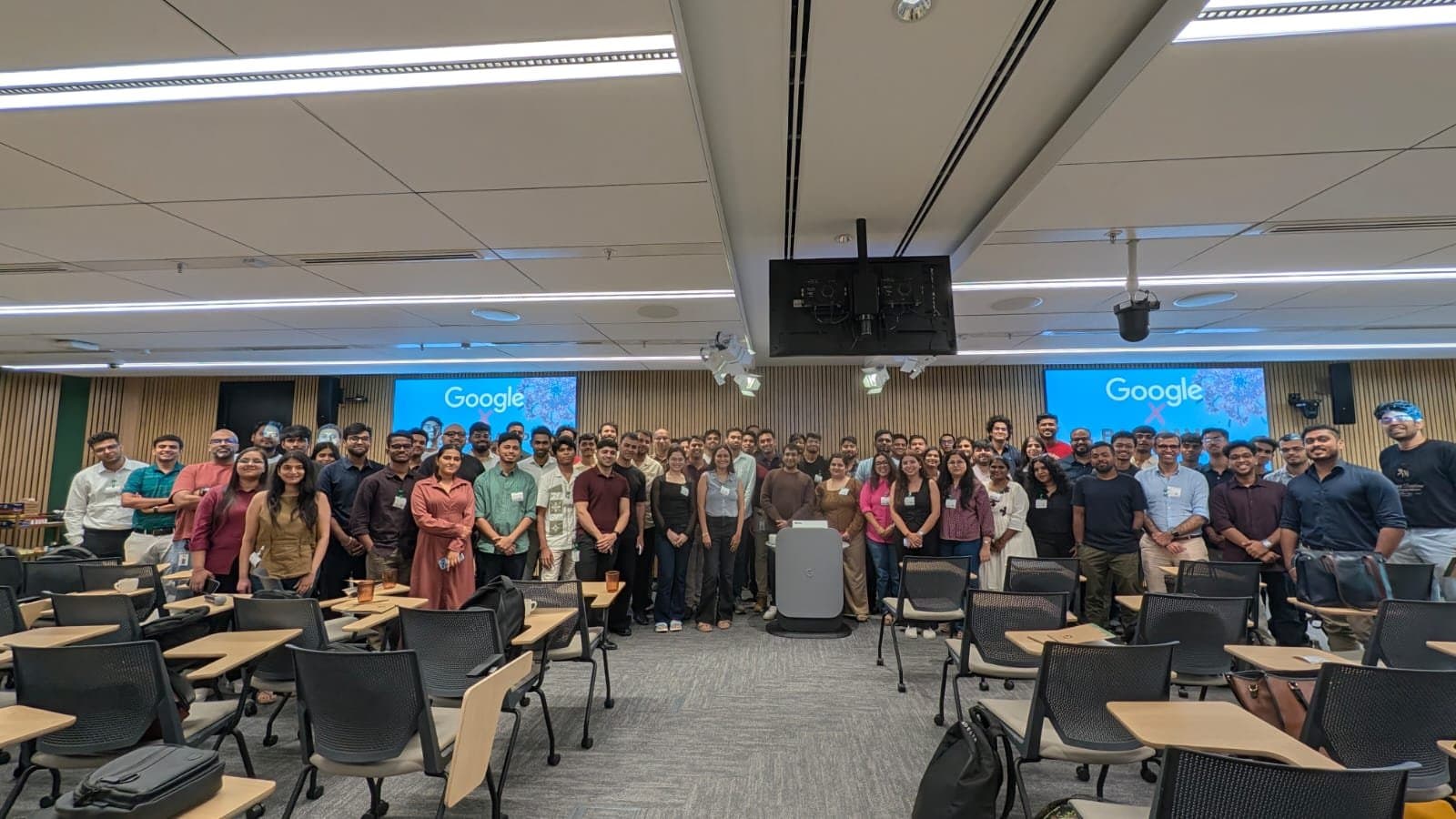
Vardhan AI at Google × Basecamp 2026, Bangalore — a session focused on YouTube, Google AI Search and building compounding growth engines.
Search is changing.
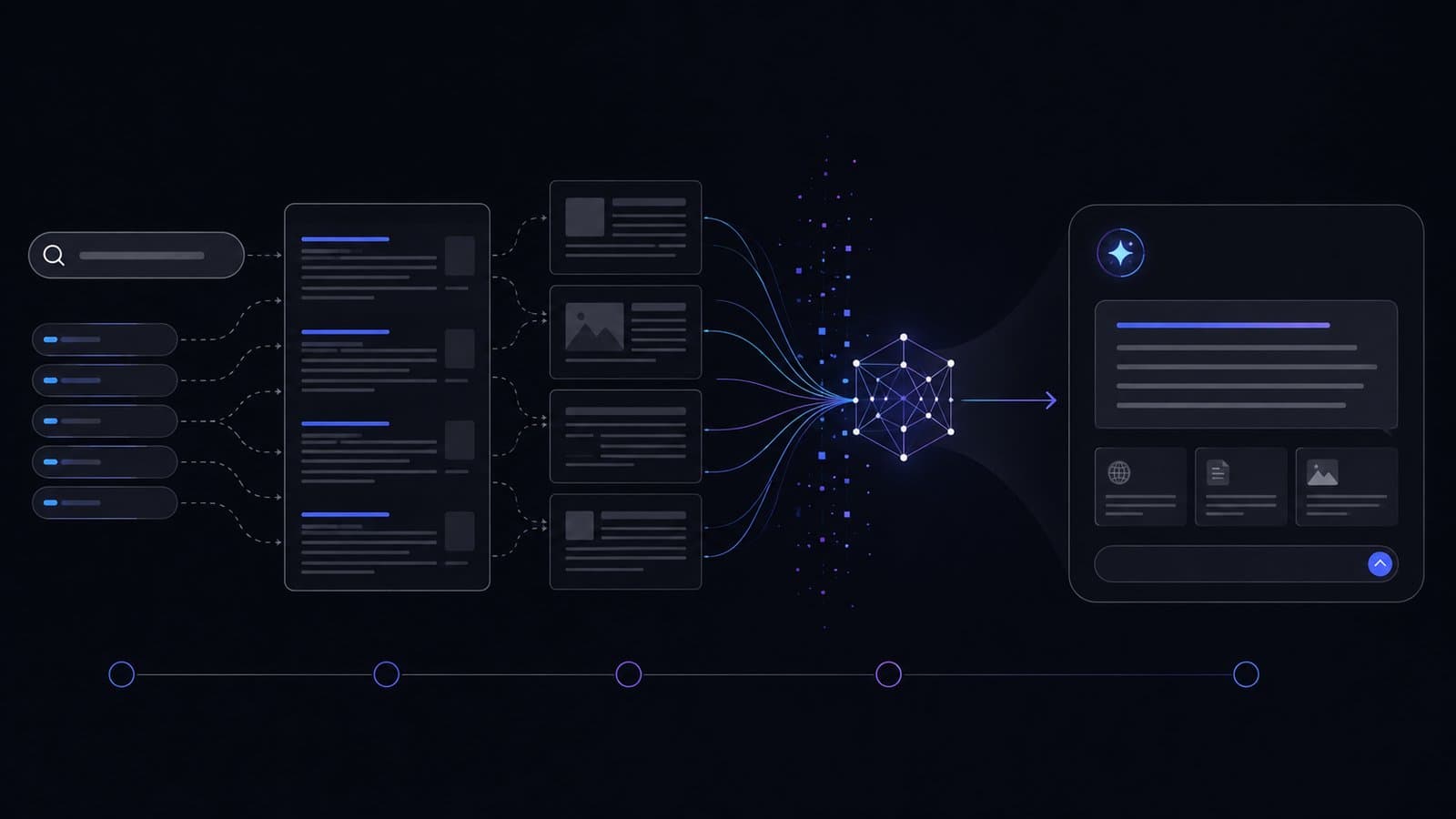
For years, businesses have optimized for a relatively simple journey: Search → Click → Website → Conversion. That model is still important. But the discovery layer around it is becoming much more complex.
People are increasingly asking AI systems questions instead of simply typing keywords into a search box. They are looking for recommendations, comparisons, explanations and businesses that can solve a particular problem.
At the same time, video is becoming an increasingly important part of how people discover and evaluate businesses.
That was one of the central themes we took away from Google × Basecamp 2026, held at Google Ananta in Bangalore.
For Vardhan AI, the most interesting part wasn't simply learning about another marketing channel. It was understanding how search, video, content, AI and brand authority are beginning to converge.
The old growth model is becoming less durable
A lot of businesses still operate around a simple growth loop: run ads, generate leads, convert leads, repeat. The problem is that much of this growth can disappear as soon as spending stops.
This creates what was discussed during the session as the CAC trap. If every new customer requires another advertising rupee, growth can become increasingly dependent on continuously buying attention.
The alternative is to build assets that continue working after they are created.
- A useful video can continue generating views.
- A strong article can continue answering questions.
- A trusted brand can continue appearing in recommendations.
- A well-structured knowledge base can continue helping both customers and AI systems understand what a company does.
The goal is therefore bigger than simply generating more content. The goal is to build a compounding growth engine.
1. Bring, Build, Boost
One framework from the session that stood out was Bring → Build → Boost. The idea is simple.
- Bring people into your ecosystem. This can happen through search, YouTube, social media, creators, communities, partnerships or other discovery channels.
- Build assets that create lasting value. Instead of treating every piece of content as a temporary social post, create content that answers real questions, demonstrates expertise and builds an information layer around your business.
- Boost what is already working. Once a topic, format, channel or piece of content demonstrates traction, increase distribution and investment around it.
This changes the mindset from "What should we post today?" to "What assets are we building that will continue creating demand months from now?" That is a much more interesting question for a business.

2. YouTube is more than a social platform
One of the biggest takeaways was the role of YouTube in the modern search ecosystem. It is easy to think about YouTube purely as a social platform. But YouTube also behaves like a search engine.
People actively search for:
- Product explanations
- How-to guides
- Comparisons
- Reviews
- Tutorials
- Expert opinions
- Demonstrations
- Problem-solving content
And unlike a short-lived social post, a useful video can continue being discovered long after it was published. This gives YouTube a unique characteristic: it can become a searchable library of your company's expertise.

For businesses, that changes the content strategy. Instead of creating videos purely because "we need to post something", companies can create videos around the questions their customers are already asking. The difference is intent:
- Instead of "Our company provides AI solutions" — create "How can a business automate lead qualification?"
- Instead of "We offer digital transformation" — create "5 business processes you can automate with AI today."
- Instead of "We build AI agents" — create "What happens when an AI agent handles your inbound enquiries?"
3. Search is moving beyond keywords
Traditional SEO has largely been built around keywords. A business identifies a keyword, creates a page around it and tries to rank. That still matters. But AI-powered search introduces another layer — people can now ask questions in natural language:
- "What are the best ways for a growing business to automate customer support?"
- "Which AI tools can help a small business qualify leads?"
- "How should a company prepare for AI-powered search?"
The answer may not simply be a list of ten blue links. AI systems can synthesize information from multiple sources and provide an answer. This creates a new challenge: how does your business become part of the information that AI systems understand and reference? This is where concepts such as Generative Engine Optimization (GEO) become increasingly relevant.
4. GEO is not simply "SEO for ChatGPT"
It is tempting to define GEO as SEO, but for AI. That definition is too simplistic. The bigger idea is information authority.
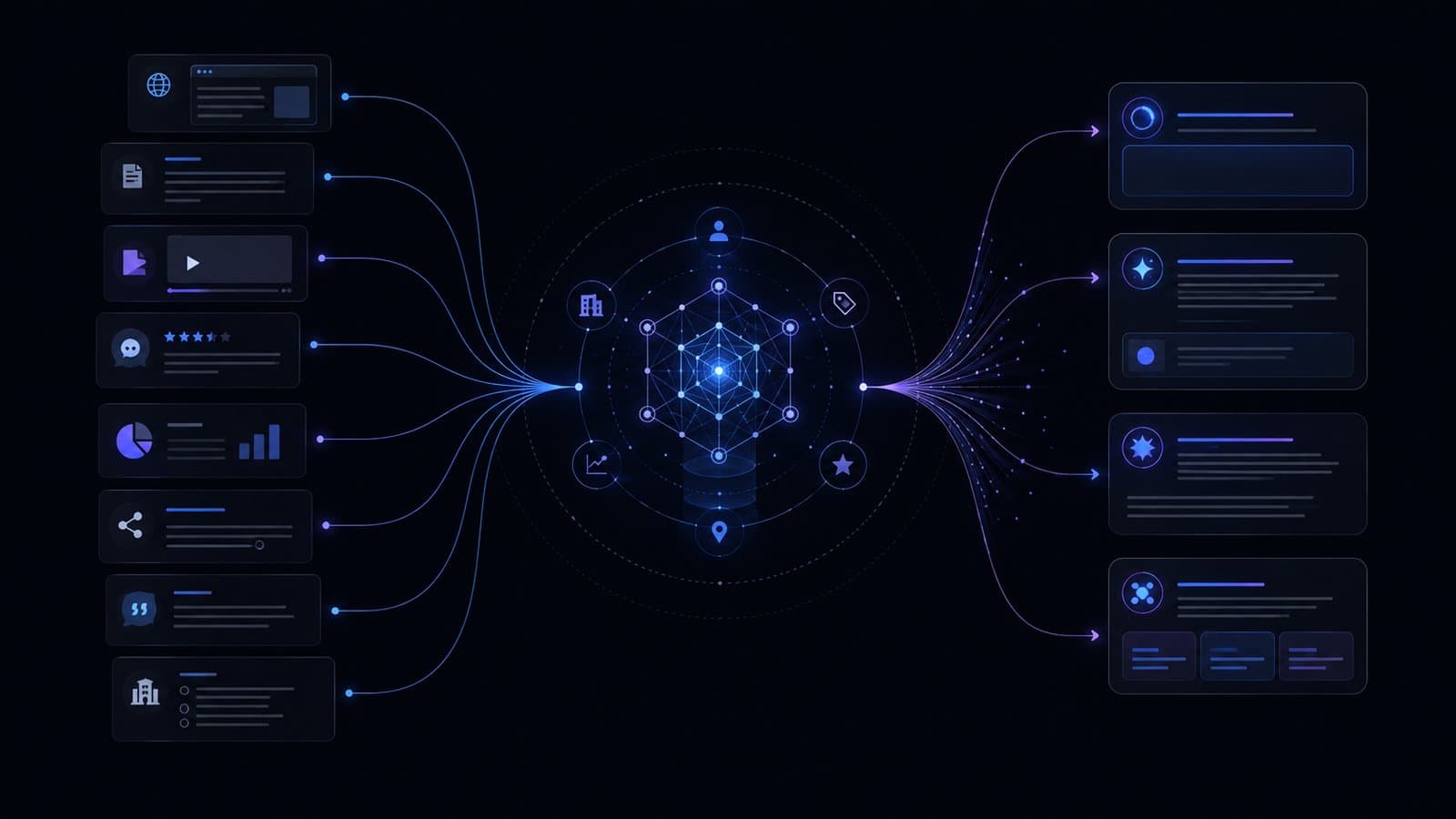
AI systems need information about businesses, products, categories and problems. The more clearly and consistently that information exists across the web, the easier it becomes for systems to understand:
- who you are
- what you do
- who you serve
- what you are known for
- what problems you solve
- how you compare with alternatives
This means businesses need to think beyond individual webpages. They need an ecosystem of useful information — website, YouTube, articles, case studies, reviews, social content, third-party mentions, and structured business information. Together, these create a stronger information footprint.
5. The category you own matters
Another idea that stood out from the session was the importance of category creation. There is a difference between competing for a keyword and becoming associated with a category.
Imagine two businesses. Business A publishes "10 tips for better customer support." Business B consistently publishes content around "AI-powered customer support for Indian businesses." Over time, Business B is creating a much clearer association — the company isn't simply producing content, it is attempting to own a mental category.
This is particularly important for emerging technologies. When a market is still developing, businesses have an opportunity to educate the market around a problem before competing purely on product features.
6. Content needs to answer real questions
The strongest content strategy isn't Company → Product → Advertisement. It is Customer → Problem → Question → Useful answer → Trust → Product.
This is a major shift. People rarely wake up wanting to consume a company's marketing material. They want answers. They want to know:
- What should I do?
- Which option is better?
- How does this work?
- How much does it cost?
- What can go wrong?
- Is this relevant to my business?
- How have other companies solved this?
The companies that consistently answer those questions can become the sources people return to. And increasingly, those are also the kinds of sources AI systems can use when constructing answers.
7. Authentic content beats polished advertising
Another important takeaway was the opportunity for creator-led and authentic video. Businesses often assume that effective video requires expensive production, professional studios, large teams and elaborate sets. It doesn't always.
A knowledgeable person explaining a real problem can be more useful than a highly produced advertisement. The important thing is not production complexity — it is expertise, relevance, clarity and consistency.
This is particularly useful for startups and smaller businesses. You don't necessarily need a huge content budget. You need a repeatable system for turning knowledge into useful content.
8. Think in systems, not individual posts
One of the biggest mistakes businesses make with content is treating every platform independently. They create one LinkedIn post, one Instagram post, one YouTube video, one blog — and then start again from zero.
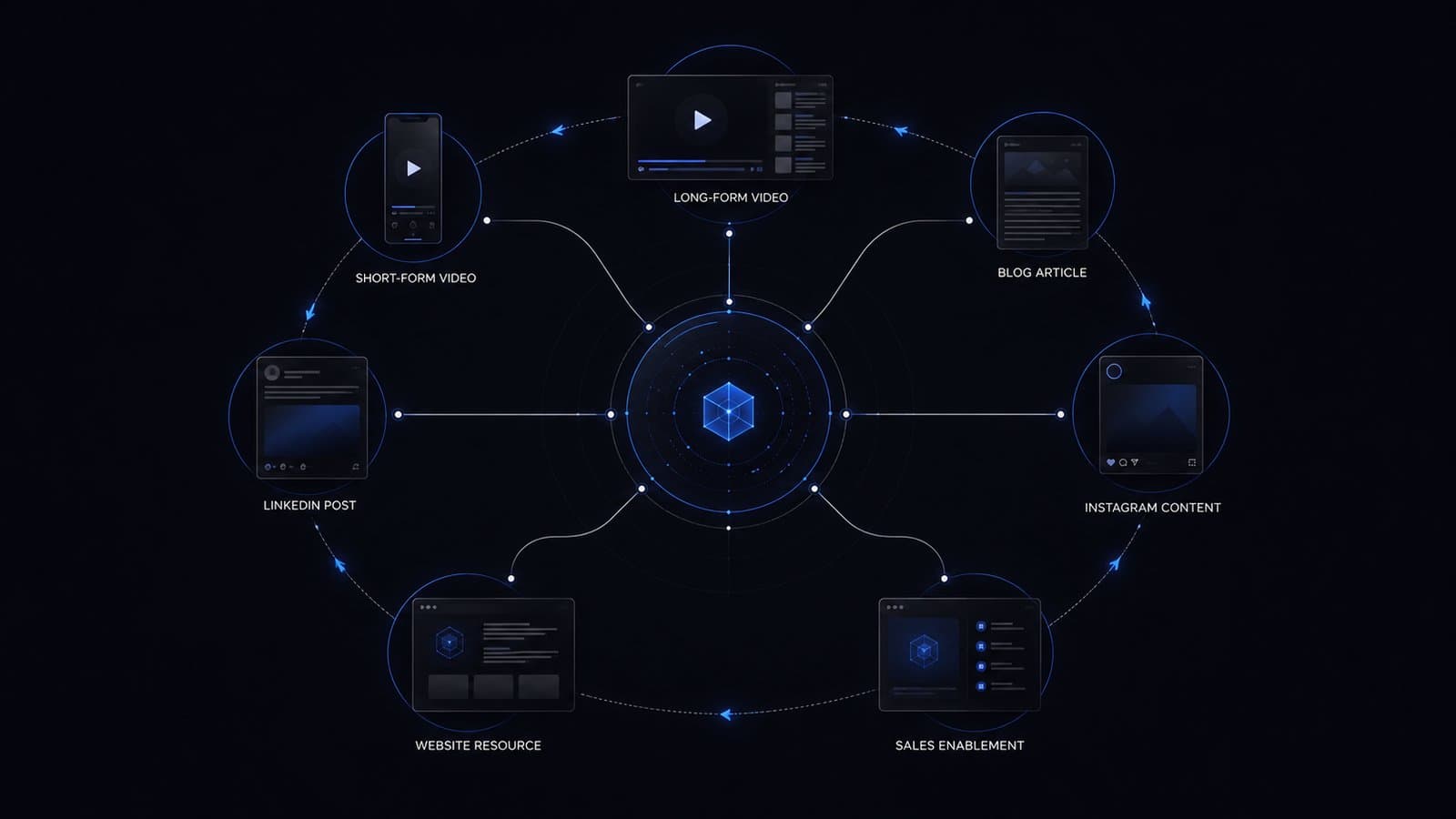
A better approach is to create one core idea and distribute it across multiple formats. For example, one topic — "How AI can automate lead qualification" — becomes:
- YouTube — a 10-minute deep-dive
- YouTube Short — a 60-second insight
- LinkedIn — the key lesson plus a business example
- Instagram — a short-form video
- Blog — a detailed explanation
- Website — an AI automation solution page with a CTA
- Sales — used directly in customer conversations
Now one idea has become an entire content ecosystem. This is what we mean by multimodal content.
9. The real metric is not just reach
Reach is useful. Views are useful. Likes are useful. But businesses ultimately need something more valuable: intent.
A person who watches a random viral video for three seconds is not necessarily valuable to a business. A person who searches for "How can I automate lead qualification?" and spends ten minutes consuming a company's content is demonstrating something very different. They have a problem. They are researching. They may eventually become a customer.
This means content strategy should increasingly connect Discovery → Education → Trust → Intent → Conversion, rather than simply Impressions → Likes → Followers.
10. Build for the long term
The biggest lesson we took from Google × Basecamp was not about one platform. It was about the difference between renting attention and building assets. Paid advertising can be extremely valuable. Social media can be extremely valuable. Short-form content can be extremely valuable. But businesses should also ask: what are we building that becomes more valuable over time?
- A library of useful videos
- A knowledge-rich website
- Strong customer reviews
- Case studies
- Original research
- Expert articles
- A recognizable category
- A trusted brand
These assets can compound.
What this means for businesses in the AI era
The transition from traditional search to AI-powered discovery doesn't mean SEO is dead. It means the definition of being discoverable is expanding. Businesses now need to think about three layers:
- Searchability — can people find you through traditional search?
- Discoverability — can people discover you through YouTube, social platforms, communities and other channels?
- AI visibility — can AI systems understand your business, expertise and relevance when answering questions?
The businesses that prepare for all three will have a stronger foundation for the next phase of digital growth.
Our takeaway at Vardhan AI
At Vardhan AI, we think the opportunity goes beyond simply "using AI for marketing." The bigger opportunity is building AI-native growth systems — systems where:
- Content creates discovery.
- Search creates intent.
- AI creates intelligence.
- Automation creates efficiency.
- Data improves the next decision.
And the entire system becomes stronger over time. That is the direction we believe modern businesses should be moving toward — not simply producing more content, not simply spending more on ads, but building a compounding growth engine.
Final thought
The next generation of search won't be defined only by who ranks first. It will increasingly be influenced by who is useful, authoritative, discoverable and understandable across the information ecosystem. And that creates an interesting opportunity for businesses of every size.
You don't need to be the biggest brand. You need to become one of the most useful sources in the category you want to own.
That is the shift from search to AI Search.
Is your business ready for AI Search?
Search is changing. The businesses that prepare early will have an advantage in how customers discover, evaluate and understand them.
Vardhan AI helps businesses build AI-native growth systems across AI automation, intelligent systems and AI visibility. Explore Vardhan AI →