How to Build an AI Proposal Pipeline: From Inquiry to Sent, Step by Step
A good sales call is worth little if the proposal takes three days to land. Here's the four-step pipeline — research, draft, price, send — that gets a personalized proposal out while a prospect is still deciding, and where a human still needs to stay in the loop.
By Garvit Jain, Vardhan AI
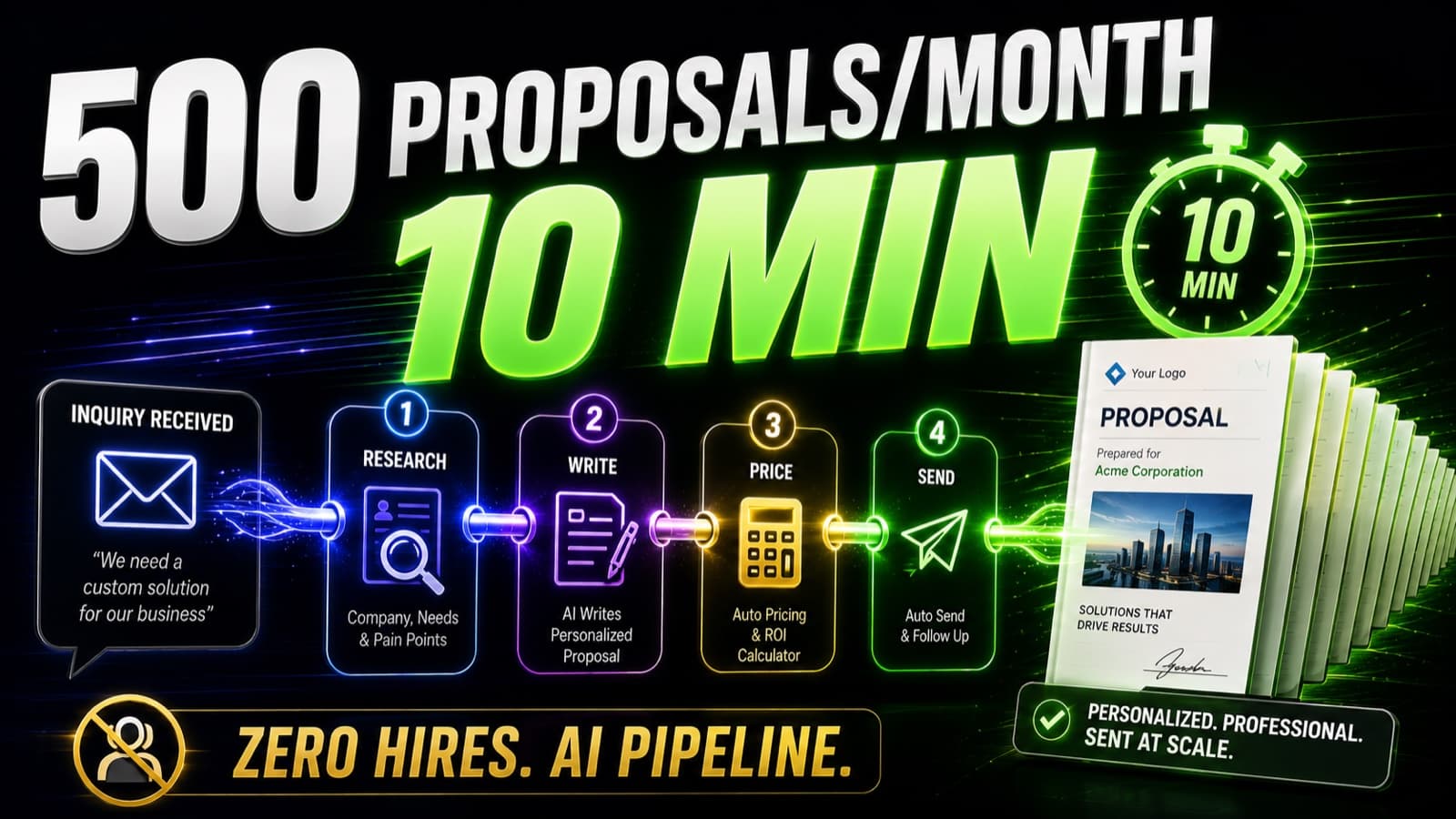
A prospect's interest has an expiration date. Right after a good call or a website enquiry, they're comparing you against whoever else they've contacted — and whoever's proposal lands first has a real edge, simply because it arrives while the decision is still open. By the time a hand-written proposal goes out a few days later, that same prospect has often already talked to someone who answered faster. We wrote about one real client's result from fixing this in AI Proposal Generator: How One Client Cut a 3-Day Turnaround to 11 Minutes; this post is the practical version — how the pipeline behind that result actually works, step by step.
Why speed matters more than most businesses assume
This isn't limited to proposals — it's true of any sales response. Research from MIT, published in Harvard Business Review, found that a lead contacted within five minutes is nine times more likely to convert than one contacted after an hour, and that most companies take far longer than that to respond at all. A proposal is a bigger, higher-stakes version of the same reply — and it usually takes far longer than five minutes to produce, which is exactly the gap this pipeline closes.
Where the time actually goes today
Ask anyone who writes proposals where the hours go, and the answer is usually the same four things: researching the company, customizing the pitch to their situation, working out the right price, and formatting a document that looks professional. None of these steps is hard on its own — the problem is that they add up, every single time, for every single enquiry.
The 4-Step Pipeline
Step 1 — Research
As soon as an enquiry comes in, the system pulls together what's publicly knowable about the company — industry, rough size, what they do, and anything that points to a likely need. This is the step that normally means opening five browser tabs; here it happens automatically, before a human even opens the enquiry.
Step 2 — Write
The draft is built from your own material — your services, your real case studies, your past proposals — matched to what Step 1 found, not a generic template with the company name swapped in. This is why a Company Brain matters here: a proposal generator is only as good as the product and pricing knowledge it's drawing from (see what a Company Brain actually is).
Step 3 — Price
Pricing is calculated from your own rules — tiers, scope, standard add-ons. This is exactly the kind of step that needs a guardrail, not full autonomy: an AI system should be able to propose a number from your rate card, but a human should confirm it before it goes out, the same "never finalizes a price without a person" rule we build into every AI Coworker (see the 5 guardrails every AI employee needs). Speed shouldn't come at the cost of a wrong number going out the door.
Step 4 — Send
The proposal goes out as a formatted document, with a personalized note, from your own address, while the prospect is still actively deciding — not a mail-merge blast, one specific document for one specific enquiry.
Where a human should stay in the loop
- Final price approval — a person confirms the number before it's sent, always
- Anything outside your standard scope — custom requests get flagged, not guessed at
- The first several proposals for any new service or pricing tier — until the pattern is proven, review before sending
The goal isn't zero human involvement — it's removing the hours of manual research and drafting so the person reviewing a proposal is checking one draft, not building one from scratch.
Who this is worth building for
- Agencies (web, marketing, design, consulting)
- B2B services with enquiry-based, custom-scoped pricing
- Contractors and professional services that quote per project
If your pricing is a single fixed number for everyone, a pipeline like this adds less value — the win here comes specifically from proposals that need real customization per prospect.
How to get started
- Write down your current proposal structure — sections, tone, the case studies you reach for most
- Write down your actual pricing rules — tiers, standard add-ons, what needs approval
- Gather 10–15 of your best past proposals as real examples
- Decide upfront what always needs a human sign-off before sending
Want this built around your own services and pricing? Talk to an AI Strategist and get a free AI assessment →